For never-coders
Use the worksheet to turn one repeated task into a prompt that stays understandable.
Open worksheetBeginner-friendly talks, worksheets, and templates for turning AI experiments into repeatable workflows without losing the joy of exploration.
Harness engineering is a practical structure around AI work: clear goal, useful context, visible path, review checkpoints, and a definition of done.
Use the worksheet to turn one repeated task into a prompt that stays understandable.
Open worksheetAdd checkpoints so experiments do not turn into mystery files and endless fixes.
Copy checkpoint rulePackage domain terms, examples, prompts, and review gates into a small context pack.
View context packImplement Harness Engineering: A Clear Path to Minimize Rabbit Holes While Vibing.
Copy one template, use it three times, then improve it once. That is enough to start a prompt library.
Goal, background, inputs, constraints, path, checkpoints, done.
Open templateA small Markdown folder for one repeated workflow.
Open starterThe cheapest way to stop drift before it gets expensive.
Open ruleLessons From Real Projects is a completed public-safe tutorial pack for non-technical builders. It teaches work orders, context packs, checkpoints, testing, and redaction using fake examples only.
Turn a vague idea into a reviewable prompt brief.
Open tutorialShare useful lessons without exposing private project details.
Open safety mapUse prompt, checkpoint, redaction, and handoff checklists.
View episodeThe tutorial pack is finished through CP5. Each checkpoint leaves a master list so future updates do not need to rediscover the context.
A student-focused module for understanding what programming languages are used for, how each one benefits a learner, and how to compare strengths, weaknesses, opportunities, and threats over the next 5-10 years.
Group languages by function: AI, web, data, backend, systems, mobile, research, games, blockchain, and legacy work.
Open moduleReview the top 25 career-relevant languages with student benefit, applications, outlook, and SWOT.
Read full reportThe next checkpoint will turn this topic into practical classroom activities so learners can test language-function understanding.
View placeholderPublic-safe game labs show how checkpoints turn ambitious ideas into playable, testable demos without losing scope control, source attribution, or handoff notes.
A public-safe snake roguelite lab through Pyxel CP11 with modules, hazards, boss pressure, scrap economy, and developer mode.
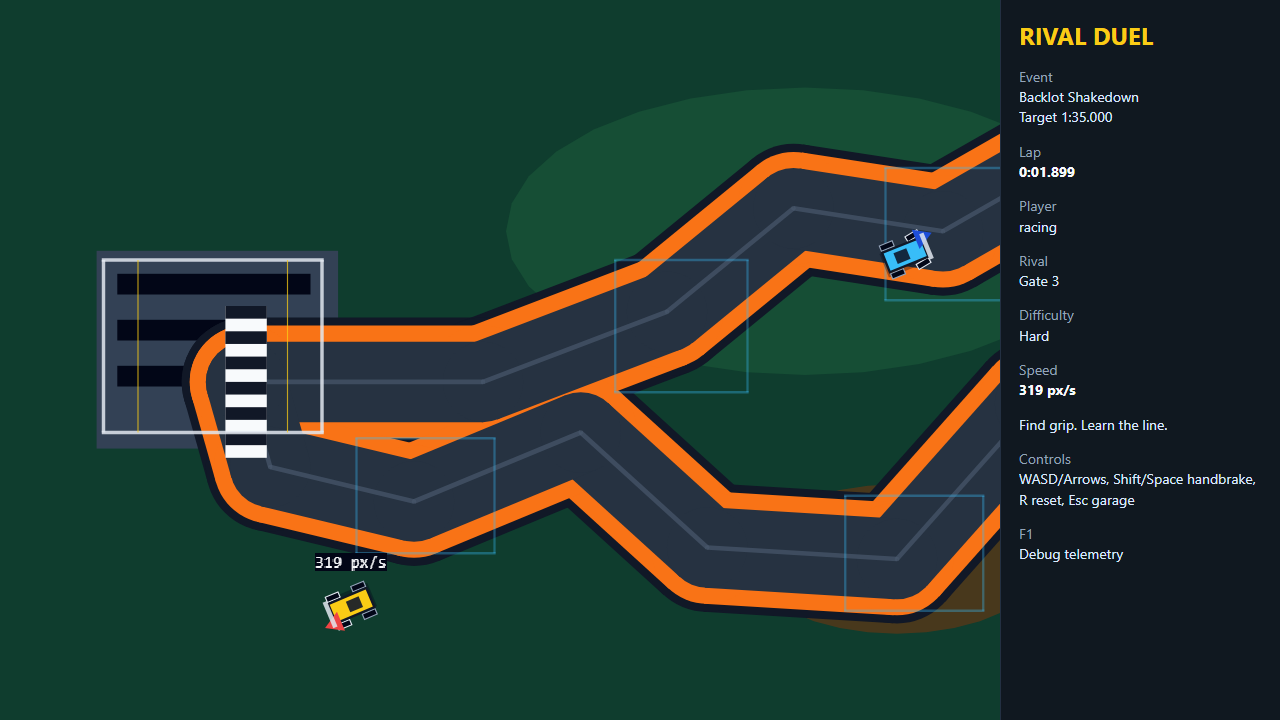
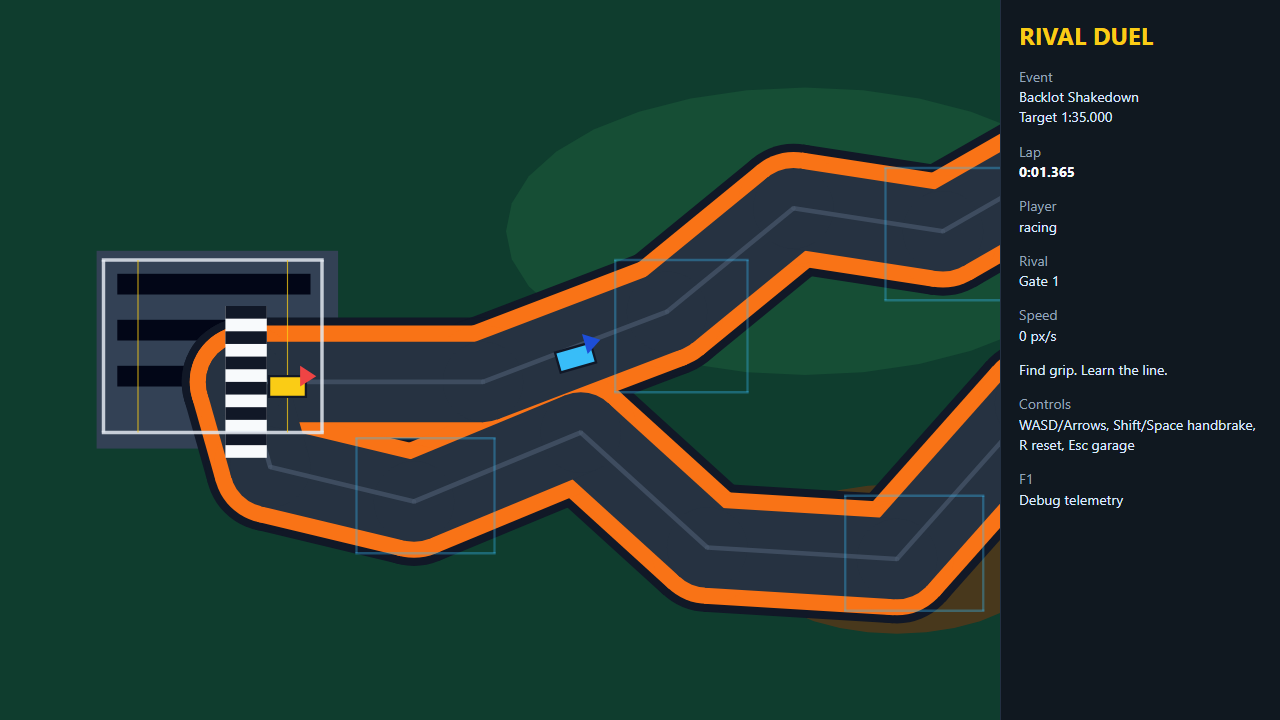
Open playtest tutorialA Phaser + TypeScript racing lab with simcade handling, Garage upgrades, rival duels, championship loop, difficulty, and visible steering feedback.
View racing labLearn the working wisdoms: harness big ideas, build racing feel, tune fair pressure, and test with evidence.
Start tutorial pathThe racing exercise is a practical study in making ambition usable. It shows how to move from idea, to scaffold, to physics, to upgrades, to rivals, to championship pressure, while keeping each step testable.
The car had to explain steering, speed, surface, and mistakes before the campaign systems could matter.
Read the lessonDifficulty became a visible, saved, testable choice instead of a hidden punishment.
Read the lessonBig ideas need small doors. Tests need screenshots. Handoffs are part of the product.
Read the wisdoms